
Clearly Explained
Recycling Terminology


What are the new labelling requirements in Italy and what do I need to do?
From 01 January 2023 all packaging, unless exempt, must be marked with an alphanumeric code to identify the materials. Identification that it is recyclable and information on the correct disposal must also be provided by this deadline.
What are the obligations?
• Producers must indicate the material of the packaging. For this the alphanumeric code according to Decision 97/129/EC will be used.
• Packaging intended for end consumers must be clearly labelled with appropriate instructions for disposal, including if the materials can be separated by hand. These must be written in Italian. The law recommends using graphics or short text such as “Empty Packaging” to help consumers separate and dispose of waste correctly.
The packaging should be labelled according to its predominant material weight. If packaging consists of several materials but the secondary material is less than 5% of its weight, it is classified as single material packaging.
In cases where physically affixing the label directly on the packaging is impossible, the mandatory information is presented through external media such as digital channels, websites, accompanying documents to packaging or external labels.
Producers can also apply alphanumeric coding and labelling through QR codes.
Does the requirement apply to all packaging?
The new environmental labelling requirements apply to primary, secondary and tertiary packaging. The alphanumeric codes for identifying materials must be applied to both B2B (Business to Business) and B2C (Business to Consumer) packaging.
However, information regarding the correct disposal of the packaging is mandatory for packaging intended for final consumers only.
What do I need to do?
- Confirm if you are using packaging in Italy. This refers to primary (product) packaging and secondary (shipping) packaging that you use to send items to customers in Italy. Please note that this obligation only refers to packaging, not to the products itself.
- Check which alphanumeric code according to Decision 97/129/EC and which appropriate instructions for disposal (please see question 4 below) are necessary for your packaging.
- Make sure you affix the combination of the alphanumeric code and instructions for disposal to your primary and secondary packaging.
- Consult the guidance provided by the Italian Ministry of Ecological Transition as well as from the Italian packaging consortium to assess the implications of these labelling obligations.
Contents
1. What is the new packaging labelling approach in Italy?
2. Who must label the packaging?
3. Which packaging categories are affected?
4. What does the label need to look like?
5. What are the recommended additions to the label?
6. Are there further specifications?
7. What is the timeline?
8. Why did the Italian legislator see a reason for a change?
9. Does this labelling obligation only apply to Italy?
10. What happens if I don’t label my packaging accordingly?
1. What is the new packaging labelling approach in Italy?
The legislative Decree No.116 of 3 September 2020 imposed a strict obligation of environmental labelling standards on participants along the supply chain, making environmental labelling mandatory on all packaging in Italy covering all primary, secondary and tertiary packaging that is put on the Italian market.
The aim of the law is to reduce the impact of packaging and its waste on the environment by:
i). Using identification codes to facilitate the reuse, recovery and recycling of packaging
and
ii). Providing consumers with information on the correct end-of-life treatment of the waste.
2. Who must label the packaging?
The decree stipulates that producers are obliged to label the packaging accordingly. The decree defines producers as “suppliers of packaging materials, manufacturers, processors and importers of empty packaging and packaging materials”.
So, the manufacturers of packaging have the primary obligation to implement the requirements. However, the decree states that the “user of the packaging” and the distributor/supplier are also subject to further obligations along the supply chain. Italian law therefore assumes a shared responsibility, whereby the fines for a breach of the regulations affect the distributor in particular as the last in the chain. CERT clients need to ensure that they are using the appropriate labelling.
3. Which packaging categories are affected?
The new obligations apply to all B2C packaging, meaning all primary (product) packaging and all secondary (shipping) packaging if shipped out to the consumer.
The obligation to state the material of the packaging by way of an alphanumeric code applies to all B2B packaging as well, however it’s not mandatory to include the disposal method on this packaging.
4. How will the labelling look?
A common misconception is that the triangle with straight arrows is a Möbius Loop, indicating that is recyclable. This is not a recyclable symbol, as it is part of the alphanumeric code symbol according to Decision 97/129/EC which indicates the material type. The Möbius Loop is a similar design but instead of straight arrows, the arrows are turned in:
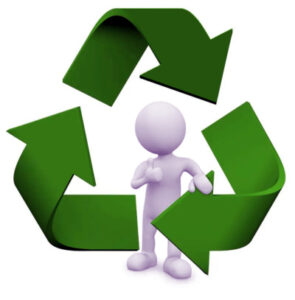 This symbol is royalty free and internationally recognised to indicate the material is recyclable. If placed on product labelling, it is recommended to indicate the component it is referring to e.g., box / tag / sleeve / wrapper, so it is clear.
For material identification purposes, some common examples are:
1 PET(E)
Polyethylene terephthalate
Polyester fibres, soft drink bottles.
2 PEHD or HDPE
High-density polyethylene
Plastic bottles, plastic bags, trash cans, imitation wood.
3 PVC
Polyvinyl chloride
Bottles for chemicals.
 4 PELD or LDPE
Low-density polyethylene
Plastic bags, buckets, soap dispenser bottles, plastic tubes.
 5 PP
5 PP
Polypropylene
Take-away beverage cups.
 6 PS
6 PS
Polystyrene
Beverage/food coolers, beer cups, wine and champagne cups, take-away food containers, Styrofoam
 7 O (OTHER)
All other plastics
Polycarbonate (PC), polyamide (PA), styrene acrylonitrile (SAN), acrylic plastics/polyacrylonitrile (PAN), bioplastics
 20 C PAP (PCB)
Cardboard Boxes and corrugated paper packaging.
 21 PAP
Other paper Mixed paper magazines, mail
 22 PAP
Wax Paper (single sided) Fast food sandwich wrappers, meat packing, gum wrappers, some drink boxes.
Annex I to VII of Decision 97/129/EC address the codes for different materials.
For business-to-business (B2B), there is no mandatory requirement to display recycling instruction on the product, just the packaging identification code for example:
For business-to-consumer (B2C) products, these require both the packaging material identification and recycle instructions for example: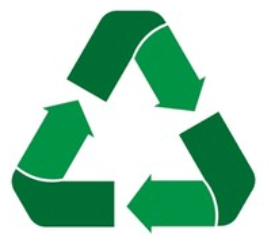
Box / Scatola
Paper Collection / Raccolta Carta
The Italian Consortium of Packaging Materials (CONAI) makes the following suggestions for labelling:
i). “Separate waste collection. Check your local municipal guidelines” = Raccolta differenziata. Verifica le disposizioni del tuo Comune
OR
ii). Information on packaging collection according to the format “[Material] Collection” e.g. “Plastic Collection” = raccolta plastica; “Paper/Cardboard Collection“ = raccolta carta
Please refer to section 6 for further guidance on this area.
5. What are the recommended additions to the label?
The Italian packaging law recommends adding further information to the label though it isn’t mandatory. This can include:
- Clearly identifying the types of packaging in multi-component packaging. This is to help the end user to separate and dispose of individual parts. Whether this is done by using a graphic or a short text is optional. If written, the text must be in Italian.
- Information on the correct separation of waste, for example “Empty the packaging” = Svuotare l’imballaggio.
6. Are there further specifications?
- Yes; please find further information in this guidance from the Italian Ministry of Ecological Transition as well as from the Italian packaging consortium, along with their FAQ page. Please note that some are mandatory, so it is strongly recommended to review the guidance linked above.
Some widely-applicable specifications include:
- If packaging consists of several materials but the secondary material, i.e. the second-most used material in the packaging, is less than 5% of the total weight, they are classified as single-material packaging. They are then labelled according to the predominant material by weight. The 5% rule is relevant when using printing ink or glue, for example.
- A packaging system that provides for a main body (e.g. out of cardboard) and other additional components (e.g. out of plastics) that cannot be manually separated must include the identification code of the material of the main body and the instructions for disposal for the material of the main body.
- It is mandatory to include labelling of all components that can be separated by hand. If this is not possible, then either on the main part of the packaging or on a separate label; otherwise on another component that makes the information easily visible to the consumer.
- If, due to lack of space or other technical reasons, it is not possible to place the label on the packaging, it is permissible to place the contents of the label on a separate medium (e.g. package insert) or via digital channels (e.g. QR code).
7. What is the timeline?
From 01.01.2023, packaging must be marked with the alphanumeric code so that the material can be identified. Information on correct disposal must also be provided on packaging.
Packaging that is already in circulation (i.e. packaging that is already produced and existing on the market in Italy) may continue to be distributed without the new labelling. However, this exemption only applies until this already existing stock is used up.
8. Why did the Italian legislator see a reason for a change?
High-quality recycling can only succeed if the materials sent to be recycled are well-sorted to begin with. The end-consumer must first be able to put the specific waste material in the correct recycling path. The sorting instructions are intended to help and educate the end-consumer. Italy wants to increase its recycling rate and better support the circular economy.
9. Does this labelling obligation only apply to Italy?
Yes; the process outlined above is specifically for the Italian market. Please head over here for labelling requirements for the French market and here for the Recycling Labelling for Spain.
10. What happens if I don’t label my packaging accordingly?
Anyone who puts packaging on the market that is not properly labelled can be held accountable. In the case of incorrect or missing labelling, fines of €5,200 – 40,000 can be imposed. The obligation is directed not only at manufacturers but also at traders, distributors, fillers, users of packaging and importers of filled packaging.
Note: This information is provided as general guidance and does not constitute legal advice. If you require more detailed support, please either get in contact with the market authority responsible for packaging sustainability or please feel free to get in contact with CERT regulatory team.
Services and Product Areas CERT support
Do you want to discuss a product?
Let’s see if we can get your product up and running with a service or specific product support. This link will help ensure you get matched with the best regulatory professional in the team for your enquiry and help us both make the most of our first call.
Clear Effective Responses to Technical challenges