
Food Products in the EU & UK
CERT Technical
CERT Technical
Food Products in the EU & UK

CERT provides specialist regulatory and technical support across all product sectors, including food products. We help businesses navigate complex EU and UK requirements with clarity and confidence.

Interested in tailored support? Register your project interest so we can arrange a complimentary call with the relevant regulatory professional in our team.

The EU governs food primarily through the General Food Law (Regulation (EC) No 178/2002), supported by horizontal measures on hygiene (Regulations (EC) No 852/2004 and 853/2004), official controls (Regulation (EU) 2017/625), and detailed rules on labelling, presentation and advertising under Regulation (EU) No 1169/2011 on food information to consumers.

In Great Britain, EU food law has been retained in domestic legislation with GB‑specific amendments, alongside national measures and guidance issued by the Food Standards Agency (FSA), Food Standards Scotland (FSS), and other competent authorities.

What counts as food (human consumption)

Food covers any substance or product, whether processed, partially processed or unprocessed, intended to be, or reasonably expected to be, ingested by humans. This includes ingredients, composite foods, beverages, confectionery and supplements, as well as foods for specific groups such as infants or people with medical needs.

Certain borderline products may fall instead under other regimes—such as medicinal products, feed, cosmetic products or biocides—or require specific assessment as novel foods, food supplements, foods for special medical purposes, or foods for specific groups.

Core obligations include:

  • Confirming whether products qualify as food, food supplements, foods for specific groups, or require novel food authorisation before being placed on the market.

  • Designing products to meet food safety, hygiene and compositional requirements, applying recognised standards and sector guidance where appropriate.

  • Operating and documenting effective food safety management systems based on HACCP principles, supported by risk assessments, supplier approval, specifications (including Ingredients/Product Specifications, Certificates of Analysis and Declarations/Certificates of Conformity), and robust change‑control.

  • Implementing quality control, traceability and recall procedures, and cooperating with competent authorities and control bodies where required (for example in relation to official controls, self‑checks or certification schemes).

  • Issuing and retaining formal declarations, attestations or product dossiers that demonstrate compliance with applicable food law, compositional standards and, where relevant, specific regulatory regimes (such as food contact materials or nutrition and health claims).

Markings and information

Food placed on the EU and UK markets must bear mandatory particulars in accordance with Regulation (EU) No 1169/2011 (and retained EU law in GB), including: name of the food (legal name, customary name or descriptive name as appropriate); list of ingredients; any substances or products causing allergies or intolerances highlighted within the list of ingredients; quantity of certain ingredients or categories of ingredients (QUID), where required; net quantity of the food; date of minimum durability (“best before”) or “use by” date; any special storage conditions and/or conditions of use; name or business name and address of the food business operator responsible for the information; country of origin or place of provenance where its omission would mislead or where specifically mandated; and instructions for use where needed to enable appropriate use.

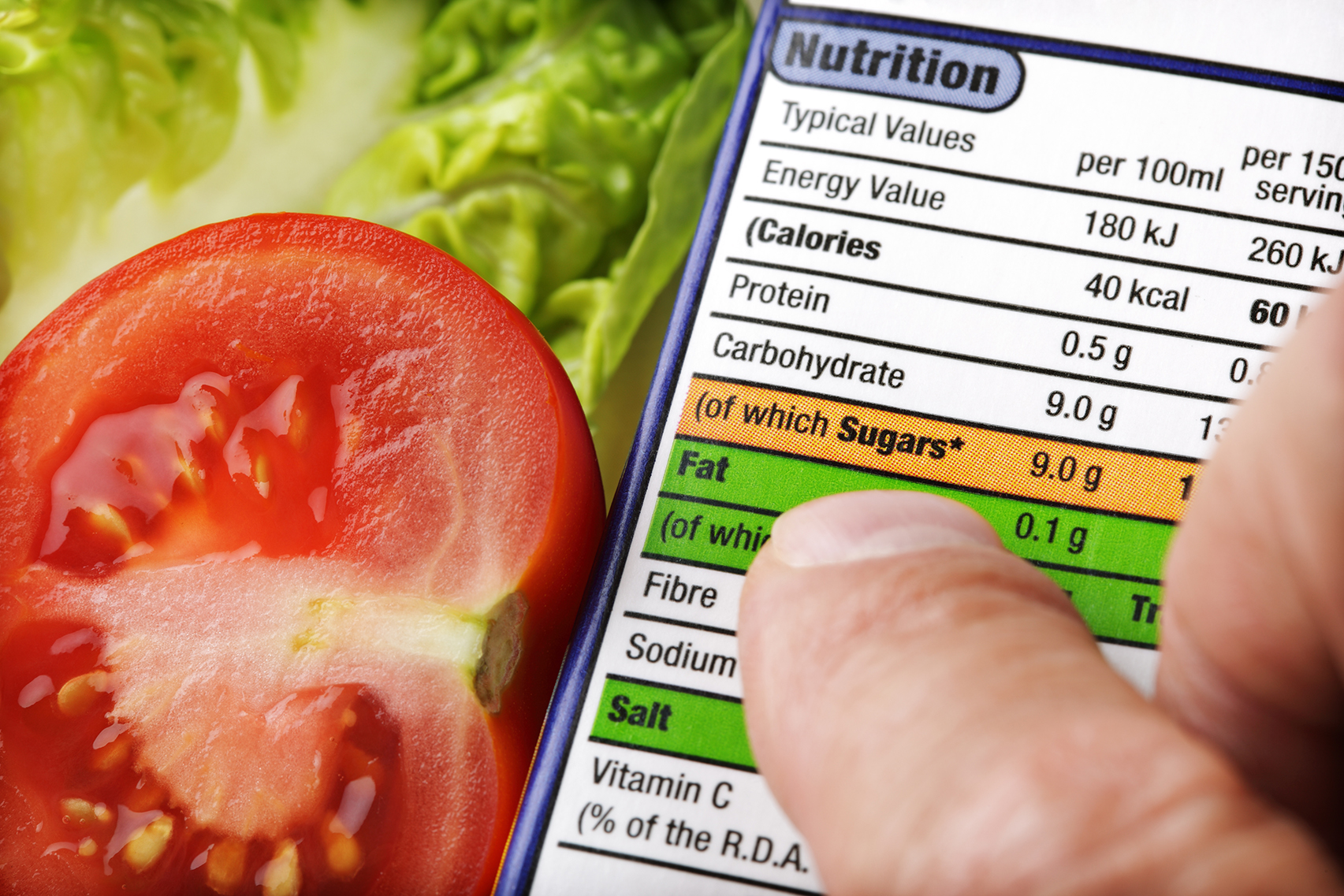
Depending on the product, additional particulars may be required, including: Nutrition declaration in the prescribed format per 100 g/100 ml; alcohol content for beverages containing more than 1.2% alcohol by volume; particular warnings or statements for high‑caffeine drinks, foods with sweeteners etc.; category‑specific information for foods such as infant formula and follow‑on formula, baby foods, foods for specific groups, food supplements, foods for special medical purposes, and foods treated with ionising radiation; for prepacked foods sold online or by distance means, provision of mandatory food information (other than the “use by”/“best before” date) before purchase, and all mandatory information at the moment of delivery.

All information must be accurate, permanent, conspicuous and legible, given in the appropriate national language(s) of the market of sale, and must not be obscured or separated from other mandatory particulars. The presentation, layout and claims must not mislead consumers, must not attribute to the food properties of preventing, treating or curing human disease, and must comply with applicable rules on nutrition and health claims, organic production, geographic indications and voluntary schemes.

Click here for our Specialist Food Team

How we can help

We ensure that labelling, advertising and claims are compliant and not misleading on the food’s nature, composition, quality, quantity, origin or use.

Food follows the familiar “mixing bowl” concept, but terminology, information order and claim substantiation are tightly prescribed.

CERT experts review designs, HACCP‑based controls and technical documentation against EU and UK standards, review of third‑party testing, prepare or verify technical files and declarations, support incident management and recalls, and deliver targeted training and regulatory updates.

With tailored, end‑to‑end solutions, CERT helps you launch food products that are safe, compliant, and ready for market—backed by clear documentation and expert support.

Slide